Tesla Confines Unsupervised FSD to Q2 2027 Robotaxi Zones
The company clarified that driverless capabilities in customer cars will initially operate only within its managed Robotaxi fleet geofences.
By Wei Zhang ·
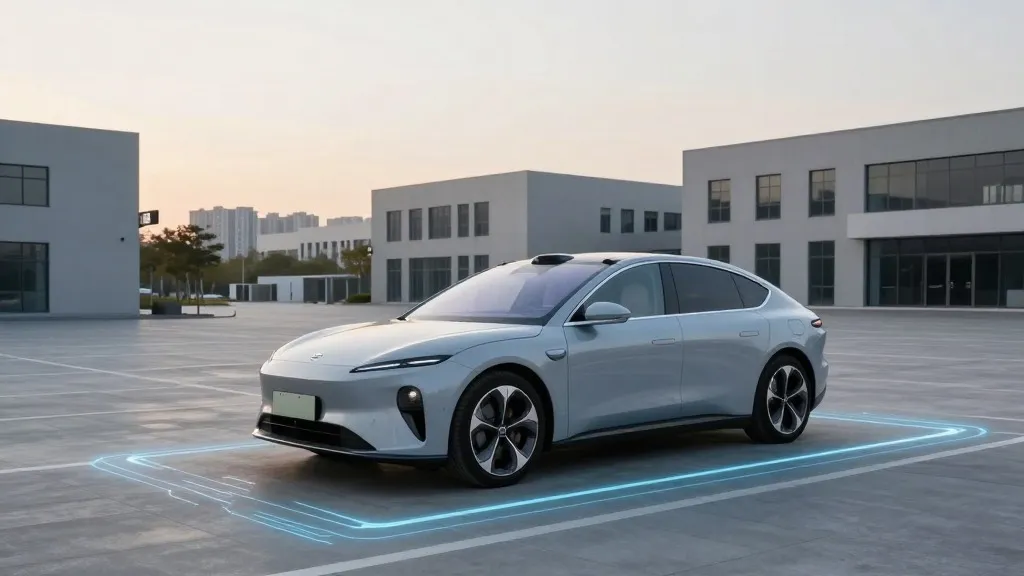
Tesla has officially targeted the second quarter of 2027 for the release of unsupervised Full Self-Driving capabilities in customer-owned vehicles, a timeline that marks the latest iteration of a promise made to buyers over the past decade. During the company’s third-quarter 2026 earnings call held today, AI chief Ashok Elluswamy provided the specific date while simultaneously narrowing the scope of the feature. He explained that the initial rollout will not grant owners a car that drives anywhere on command. Instead, owners will be able to add their personal vehicles to Tesla’s managed Robotaxi fleet, meaning the cars will only drive themselves within the specific areas where Tesla’s autonomous service is already active.
Retail investors pressed the company on this timeline during the call, with one prominent question asking when they could anticipate unsupervised FSD in customer cars. That specific inquiry was backed by approximately 1.1 million shares, highlighting the high level of interest among the company's shareholder base. Elluswamy’s response directly addressed the expectation set by CEO Elon Musk, who has long pitched the software as a way for owners to sleep in the back seat while their vehicle handles the commute. However, the executive framed the upcoming update as an integration into Tesla’s operational network rather than a standalone consumer software package.
The practical implications of this strategy are significant because Tesla’s Robotaxi service currently operates in only six U.S. metropolitan areas, and the serviceable zones are relatively small. In Miami, the designated area covers mostly West Miami and a limited strip extending toward Doral and Sweetwater. Similar constraints apply to Orlando and Tampa, which launched in July with small geofences. Within these boundaries, the vehicles stick to low-speed routes, largely avoid highways, and bypass the more complex parts of the cities. This limited coverage means that unsupervised driving will be a niche feature for most owners unless they live and work within these specific pockets.
Regulatory hurdles further complicate the timeline, particularly in the Bay Area. Although Tesla operates there, the service is not yet unsupervised because California regulations require a safety driver in every car. Tesla has chosen not to release data to the California Department of Motor Vehicles, a step required for operation beyond a level 2 autonomous system. This regulatory status contrasts with the company’s other markets and adds a layer of complexity to the Q2 2027 target.
The scale of the current Robotaxi fleet also provides context for the upcoming expansion. Tesla reported that its Robotaxi service reached nearly 2 million cumulative unsupervised miles by the end of the third quarter, a month after the Cybercab joined the Austin fleet. However, third-party tracking data from this spring indicated that the number of fully driverless Teslas on the road remains in the dozens, a figure far below the hundreds of thousands Musk has previously discussed. Competitor Waymo has already established a presence in both Orlando and Tampa, accumulating over 3 million miles, placing pressure on Tesla to accelerate its deployment.
Elluswamy identified safety as the primary bottleneck for expanding the service to faster roads and more difficult environments. He suggested that these safety issues will be resolved by next year, though he acknowledged uncertainty in the process. This cautious approach contrasts with the broader narrative of a car that can drive anywhere, reinforcing the idea that the Q2 2027 launch is a specific, controlled step rather than a universal update.
Long-time FSD buyers have faced shifting expectations since 2016, when the pitch was a car that would eventually drive itself anywhere through a simple software update. In July 2025, Musk told investors that unsupervised personal use would be available in certain geographies by the end of that year. A year prior, he expressed doubt that Tesla would not have unsupervised self-driving the following year. Additionally, owners of the Hardware 3 platform have been informed that their computers cannot run unsupervised FSD at all, leaving no clear upgrade path for that segment of the customer base.
The Q2 2027 target now represents a narrower product definition: a car that joins Tesla’s fleet, operates in Tesla’s zones, and follows Tesla’s terms. This shift moves the goalpost from a universal driving assistant to a specific utility within a controlled environment. For shareholders and customers alike, the focus remains on whether Tesla can safely and reliably expand these geofences to make the feature useful for a wider audience.
Next steps involve Tesla continuing to refine its safety algorithms and expand its operational zones. The company will likely monitor the performance of the Cybercab and other models within the current six metros before making broader announcements. Investors will watch for updates on the California DMV process, as progress there is seen as a key indicator of the company's regulatory standing and technical readiness.
Source: Electrek