NASA Reveals Starship Needs 22 Launches for Moon Mission
A new internal estimate suggests the Artemis lunar program may require more than two dozen Starship flights to fuel a single crewed landing.
By Zanele Khumalo ·
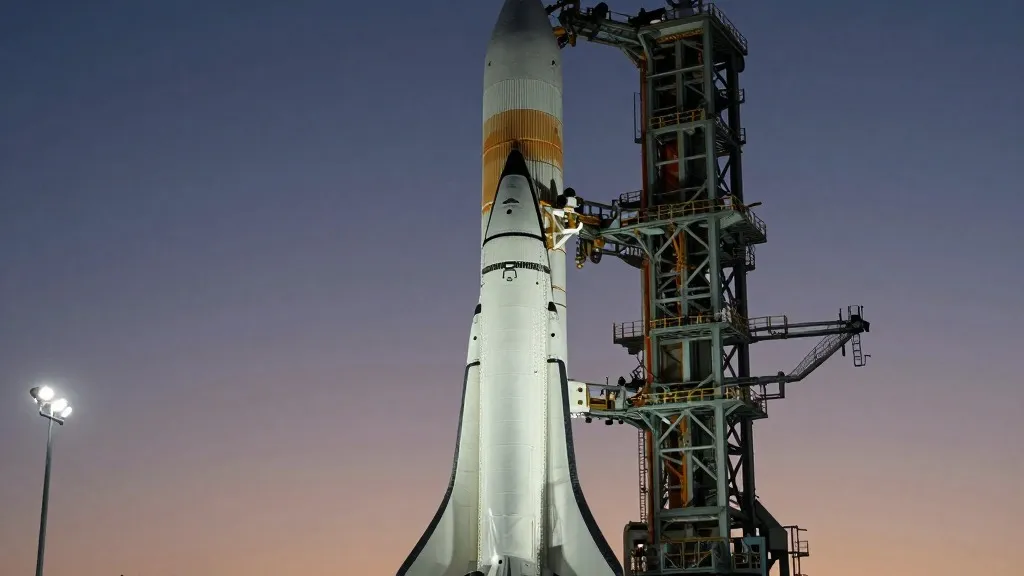
NASA has finally stopped guessing at the fuel math for its moon return.
The agency has settled on a specific figure for the number of SpaceX Starship rockets required to support a human landing on the Moon. This new estimate stands at 22 launches, a number that significantly exceeds previous informal estimates from agency leadership. The figure represents the total count of Starship vehicles needed to deliver sufficient propellant to a lunar lander in low-Earth orbit. Once fueled, the lander can travel to the Moon, land, and return to lunar orbit.
This number has been a subject of intense speculation and internal debate for years. NASA officials have historically been hesitant to share a definitive count, often citing the evolving nature of the technology. In 2023, Lisa Watson-Morgan, then the director of the Human Landing System program, told reporters that the agency had a general idea but was reluctant to commit to an exact number. She later described the expectation as being in the "high single digits to the low double digits." That phrasing implied approximately a dozen launches, a figure that already represented a substantial logistical undertaking for SpaceX.
The logistics behind these numbers are complex. The plan involves launching a "depot" Starship to orbit first, which serves as the primary vehicle for the lunar journey. Subsequent "tanker" Starships then fly up to transfer liquid oxygen and methane into the depot. Under the previous estimate of a dozen total launches, SpaceX would have needed to send 11 tankers to fully load the depot. The new estimate of 22 suggests that nearly two dozen tankers may be required to achieve the necessary propellant load for a crewed mission.
Other NASA officials have previously floated even higher numbers, with some citing the "high teens" as a possibility. The underlying hope for the program has always been that SpaceX would dramatically improve the lift capacity of the Starship vehicle. Such an improvement would reduce the number of tanker flights required to fuel the depot. However, recent discussions among NASA officials suggest that this dramatic improvement may not arrive in time for Starship to play a meaningful role in the Artemis program this decade.
The new estimate surfaced during the quarterly meeting of the NASA Aerospace Safety Advisory Panel on Thursday. Panel member Charlie Precourt, a former NASA astronaut, spoke about the risks associated with the Artemis Program. His comments highlighted the complexities of landing humans on the Moon and the specific challenges posed by the fueling requirements for the Starship-based lander. The panel’s discussion underscores the critical importance of getting the launch count right for the program's timeline.
The shift to a higher number reflects a more conservative assessment of the current capabilities of the Starship vehicle. It indicates that the agency is planning for a scenario where the lift capacity improvements are slower than initially hoped. This has implications for the frequency of launches required in low-Earth orbit, which is a busy region of space. Coordinating 22 launches into a single orbital depot is a significant operational challenge that requires precise timing and safety protocols.
The Artemis program aims to return humans to the Moon, a goal that has been a cornerstone of NASA’s exploration strategy for years. The Starship rocket is central to this plan, serving as the vehicle for both the lander and the propellant transfer. The new estimate provides a clearer, albeit less optimistic, picture of the scale of operations needed. It moves the conversation from vague estimates to a concrete number that can be used for planning and resource allocation.
This update comes at a pivotal moment for the program, with the decade's timeline becoming a key focus for both NASA and SpaceX. The agency's guard over this number suggests they are treating the launch count as a sensitive metric, akin to protecting critical technical data. By revealing the 22-launch estimate, NASA is providing a more transparent view of the challenges ahead. This transparency is likely to shape future discussions about the pace of development and the integration of the Starship system into the broader Artemis architecture.
The path forward now involves confirming whether SpaceX can achieve the necessary performance gains to lower this number. If not, the program will proceed with the assumption that 22 launches are required for each lunar landing. This has significant implications for the cost and schedule of the Artemis program. The agency will continue to monitor the development of the Starship vehicle and adjust its plans accordingly as more data becomes available from test flights and operational missions.
Source: Ars Technica