AI Hardware Shift: Meta Deploys Google TPUs in Production
Meta is now running AI workloads on Google’s custom chips via a new PyTorch-native engine, marking the first time TPUs are sold to an external customer for production use.
By Ama Boateng ·
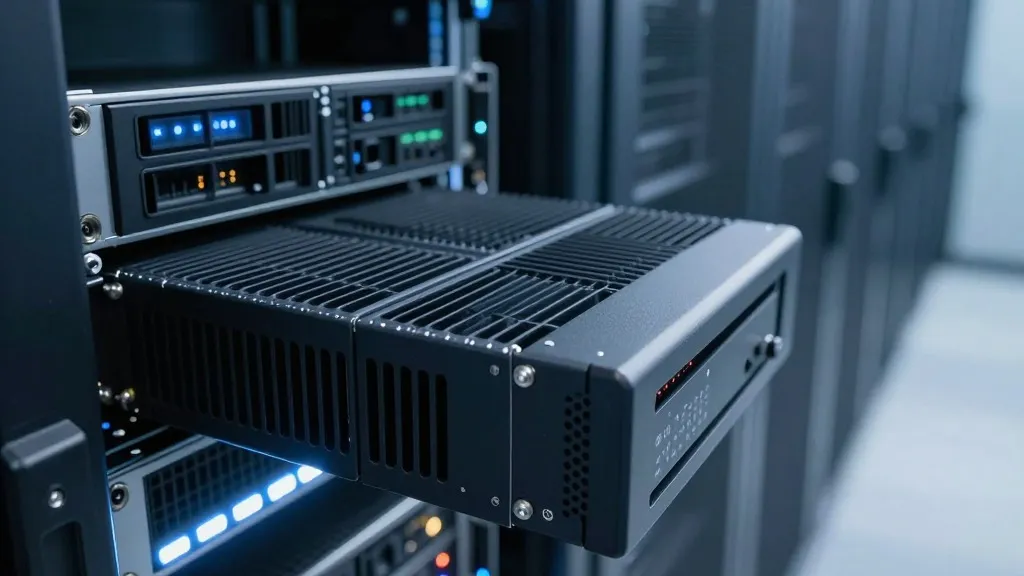
Meta Platforms has officially integrated Google’s custom silicon into its core AI infrastructure, marking a significant pivot in the major tech company's hardware strategy. The social media giant is now running production AI workloads on Google’s Tensor Processing Units (TPUs) through a newly released, PyTorch-native version of the SGLang inference engine. This development, announced via Google’s developer blog on Wednesday, represents a critical step in diversifying the hardware landscape that powers large language models.
The move allows Meta to utilize Google’s TPU hardware natively within the PyTorch framework, eliminating the previous requirement to rewrite code for Google’s proprietary JAX environment. Zongwei Zhou, Meta’s lead for PyTorch-TPU integration, confirmed that the new SGLang-TorchTPU stack is already active in Meta’s production environment. Zhou described the deployment as the result of a three-way collaboration between Meta, Google, and the SGLang team, noting that the new stack provides Meta with a highly mature and efficient serving capability.
Jana van Greunen, director of PyTorch engineering at Meta, emphasized the strategic necessity of this shift. She stated that Meta cannot remain dependent on a single hardware architecture and that the new TorchTPU backend enables the company to deploy its PyTorch workloads directly onto Google’s TPUs. Google confirmed that it co-developed this specific backend in close partnership with Meta’s PyTorch team, signaling a deeper technical alignment between the two companies.
This is not the first time Meta has explored Google’s custom chips, but it is the first time the hardware has been sold to an external customer for widespread production use. Previously, Meta research teams utilized TPUs through an older bridge called PyTorch/XLA between 2020 and 2023 before those contracts were canceled. Industry reports from last year indicated that negotiations involved renting TPU capacity from Google Cloud in 2026, with potential purchases planned for 2027. Meta subsequently signed a multi-year rental agreement, laying the groundwork for the current production rollout.
The timing of this announcement is notable, as it arrived just one day after Amazon announced it was open-sourcing TorchNeuron, its own native PyTorch backend for Trainium2 and Trainium3 chips. Both announcements were made at the same PyTorch Conference, suggesting a coordinated industry effort to reduce reliance on Nvidia’s software ecosystem. By providing native PyTorch support for non-Nvidia hardware, Google and Amazon are working to loosen the software lock-in that has long favored the graphics chip giant.
Performance benchmarks highlight the competitiveness of the new integration. A tuned vLLM setup serving Moonshot AI’s open-weight Kimi K3 model, which has 2.8 trillion parameters, reportedly achieved over 700 tokens per second for a single user on the seventh-generation Ironwood TPU. These figures were provided by Inferact, the startup founded by the creators of vLLM that assisted Google in building the vLLM-TorchTPU backend. The test utilized 16 Ironwood chips with speculative decoding, a technique that accelerates inference using a smaller draft model.
In comparison, vLLM’s published setup on 16 Nvidia GB200 chips reached 452 tokens per second under similar conditions. The new kernels for Kimi K3 and the Qwen 3.8 27B model deliver throughput that is roughly 1.4 to 2 times higher than the GB200 baseline at small batch sizes when speculative decoding is not used. This performance advantage underscores the potential for TPUs to compete directly with Nvidia’s high-end offerings in specific inference scenarios.
Looking ahead, the SGLang-TorchTPU project plans to expand its model support, starting with DeepSeek V4.1 Flash and Reflection Beam. RadixArk, the startup founded by the SGLang creators that maintains the engine, aims to achieve Day 0 TPU support for new open models by the first quarter of 2027. This means that as soon as new open-source models are released, they will be supported on TPUs without delay.
Google, Meta, and RadixArk are scheduled to share further details about their collaboration at the SGLang Summit 2026, taking place on November 12 and 13 in San Francisco. The event is expected to provide more insights into the roadmap for native PyTorch support on Google’s custom hardware, potentially setting a new standard for multi-vendor AI infrastructure in the industry.
Source: Tom's Hardware